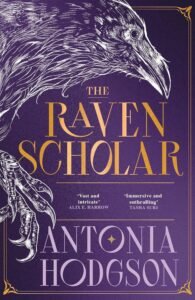
Welcome to Orrun, a world ruled by the Emperor and guided by a zodiac of God-like powers: Dragon, Bear, Monkey, Fox, Ox, Hound, Tiger and Raven. Each of these animals, almost like martial arts styles, represent personality traits and ways of serving the Empire. Foxes are cunning and quick, making excellent scouts and assassins. Ravens are studious scholars and the industrious oxen, engineers.
At a coming of age, residents can choose to join a monastery relating to one of the animal guides, and live with those rules applied. I liked this idea, it compartmentalises personality traits based on animal or elemental characteristics, which is something you can find in cartoons like ‘Jackie Chan Adventures’ and ‘Avatar: The Last Airbender’ (more a reflection of me than anything else). Because of this, there is more of a YA feel to the setting, which seems to grow into an adult mystery/fantasy novel.
The story starts with Yasthala and her children being visited by the hound guardians of the Emperor; these are rule orientated folk who tend to value honour and service. Yasthala was the wife of deceased Andren Valit, a former Tiger warrior who tried to usurp the throne. In Orrun, there is some rotation of Emperors after a certain number of years: a protection against despotism. To choose the next candidate, a Hunger Games style set of trials is undertaken, with each animal monastery sending a representative to compete for the seat of control. We start after Berson (current Emperor and former Bear contender) has beaten Andren Valit fairly in the trials but also weathered the attempted coup. Yasthala, now under Berson’s watch, is summoned to the capital alongside her and Andren’s eldest children, Ruko and Yana.
Ego from Tiger blood rises, and our hero, the Raven Scholar Neema Kraa signs over a warrant of exile and certain death…
A new Emperor must be elected from the animal encampments. Each of the monasteries which teach the different animal disciplines is in fact based on real deities: there is a belief that they had saved Orrun before, but should they be summoned again, only total destruction awaits.
Neema, as part of the Raven monastery, is bookish and analytical, and it seems that the Raven itself may be involved and collectively narrate the story. Following the introduction of Yana’s troubles, it is now time for the festival for the election of the next Emperor. A mystery wrapped up in fantasy ensues as we follow Neema through the trials while she seeks to catch a killer and gain understanding.
With the elaborate world building and scene-setting I felt as though it took around 150 pages (out of the chunky 640) to get into it. But after that point, the rollercoaster really begins. The plot is highly engaging with a number of adept twists and turns. These features set The Raven Scholar apart from traditional high fantasy: it does not feel stuffy or heavily weighted in lore (but there is terrific world building and backstory), and presumably from Hodgson’s award-winning experience in crime writing, the pacing is excellent.
I felt as though this was the perfect pairing of genres. Sometimes the humour didn’t always land for my personal taste, but this felt insignificant given the character creation and development, the immense world and overall tempo. To me, (after 150 pages), I really felt this was very readable and I haven’t felt as gripped by a novel for ages. Maybe there is a childish delight in the book’s main features: excellent pacing for racing through, a world of animal deities with mysterious powers and the overall fantasy setting. In an interview with The Bookseller in February 2025, Hodgson mentions that the writing provided her with a refuge. I read this at a particularly hard time, and also found that same place of safety.
The Raven Scholar is brilliant escapism, and I’m looking forward to the next in the series.
D